 Foundation Repair Portland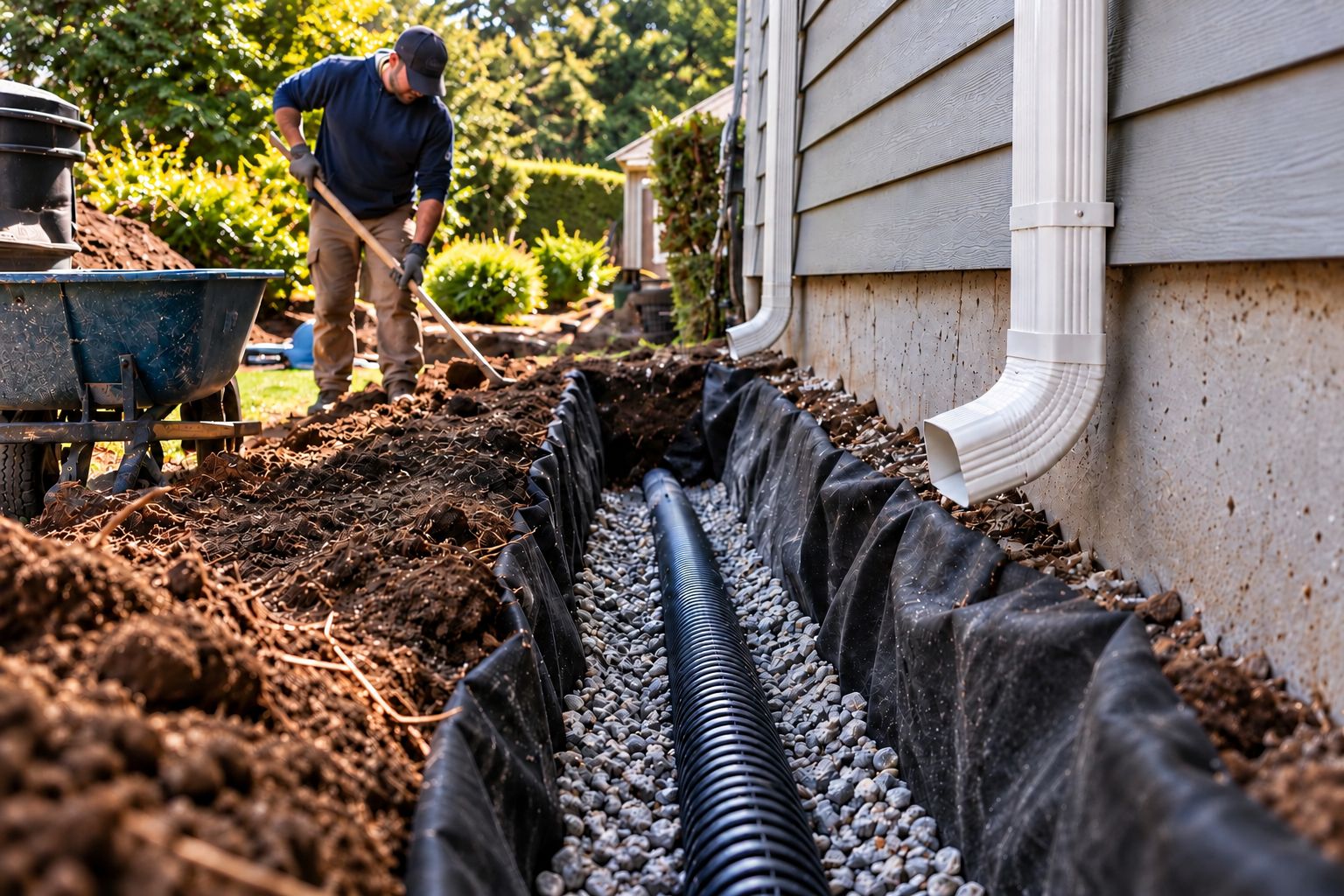
Groundwater and Site Drainage
French Drain Installation in Portland
Water collecting near your home? Let's examine where it comes from and where it should go. Get a Free Estimate
- Free Estimates
- No Obligation
French Drains for Persistent Drainage Problems
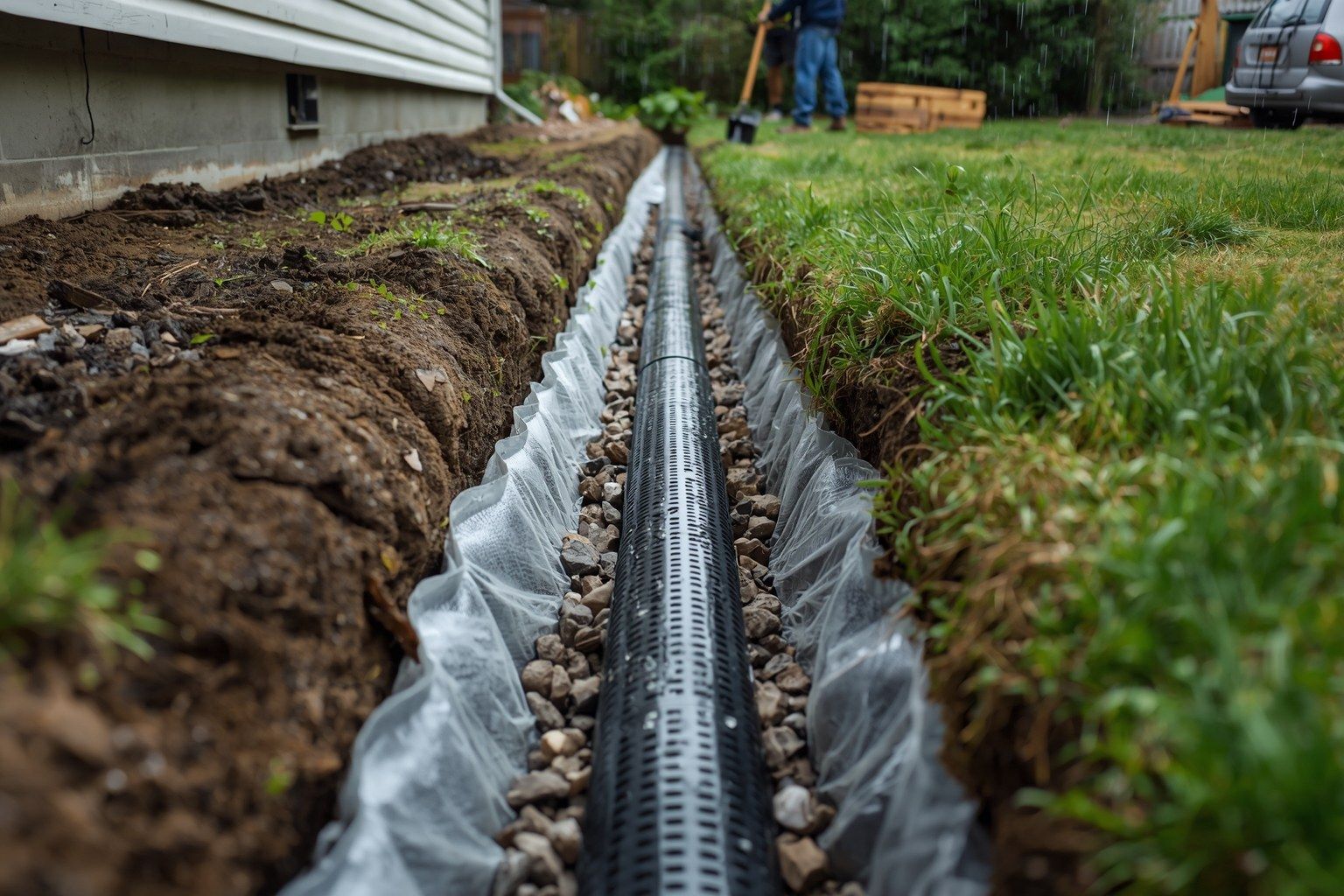
Water that repeatedly collects in a yard, along a foundation, or in a low-lying area can make outdoor spaces difficult to use and contribute to moisture problems around a building. A French drain is a subsurface drainage system that typically uses a perforated pipe surrounded by suitable aggregate and a filter arrangement to collect and redirect water.
For Portland properties, drainage planning should consider seasonal rainfall, soil characteristics, slopes, existing utilities, and the proposed discharge point. A French drain can be useful in suitable conditions, but it is not the right solution for every water problem. Surface runoff, leaking plumbing, groundwater pressure, and roof drainage may require different or complementary measures.
Service Areas
Foundation Repair Portland Is Proud to Serve Portland
Options
French Drain Design and Installation
An effective drainage system depends on where water collects, how it moves through the site, and whether gravity or another approved method can carry it to a suitable destination. The layout, depth, pipe, aggregate, filter materials, and discharge point should be selected for the property's conditions.
Foundation Perimeter Drainage
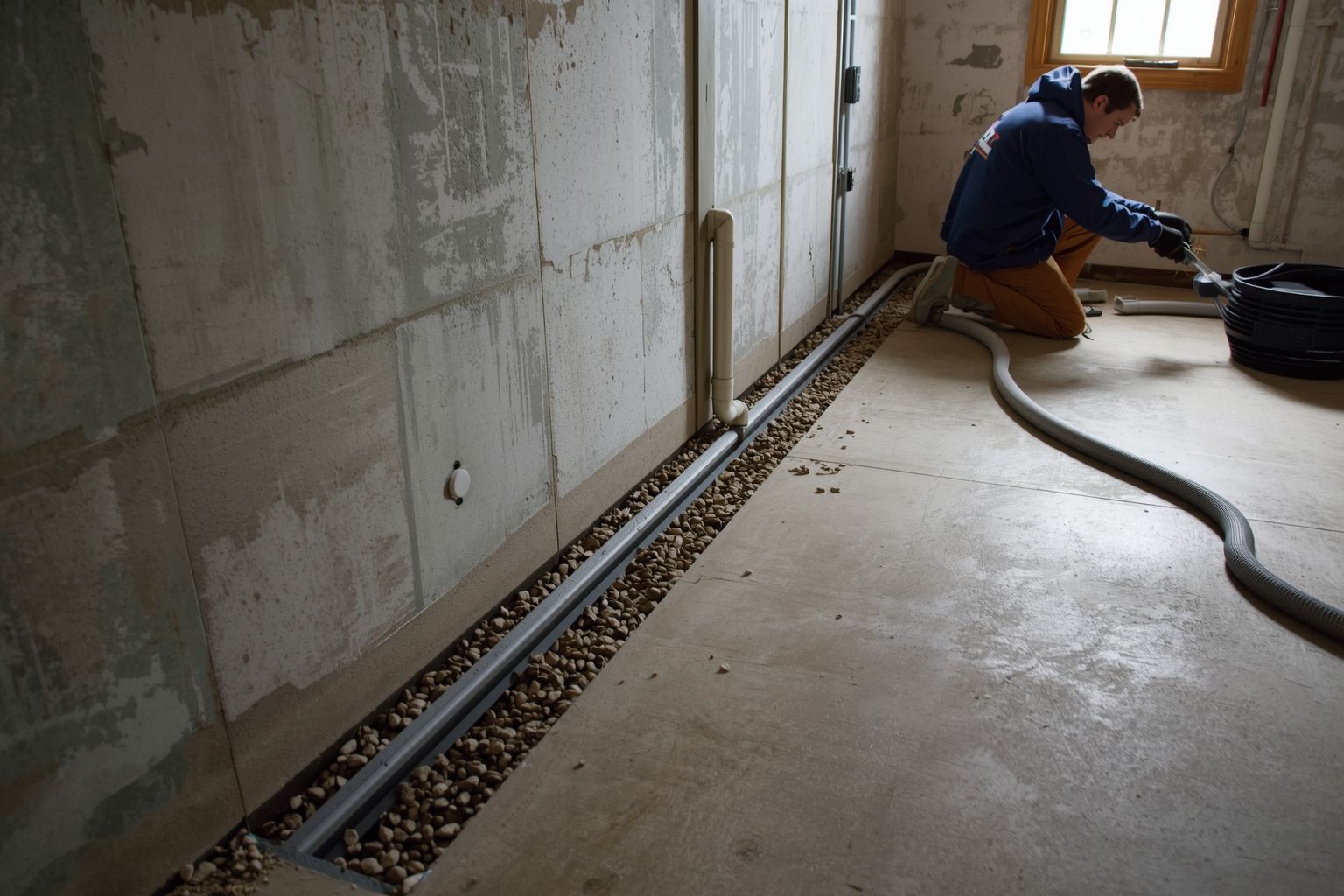
Where site conditions support it, a French drain or similar subsurface system may help collect water around selected foundation areas. Excavation near foundations requires careful planning to avoid damaging the structure or utilities.
Yard Drainage
Low areas that remain wet may benefit from a subsurface drainage route when soil and water conditions are appropriate. Surface grading and collection points should also be reviewed.
Drainage Aggregate and Pipe
Perforated pipe and compatible drainage aggregate allow water to enter and move through the system. Pipe slope, filter design, and material selection influence performance and the risk of sediment buildup.
Discharge Planning
Collected water needs a suitable, permitted discharge destination. Site conditions and local requirements determine which outlets are acceptable and whether additional components are necessary.
Related Surface Water Improvements
Gutters, downspouts, grading, and surface drains can influence how much water reaches a problem area. A combined plan may be more suitable than installing a French drain alone.
Cost Factors
Understanding French Drain Installation Cost
| Service | Estimated Cost | Average |
|---|---|---|
| Short localized French drain | Requires site assessment | Varies by length and depth |
| Yard drainage system | Requires site assessment | Varies by terrain and discharge |
| Foundation-area drainage | Requires foundation and site assessment | Varies by excavation and access |
| French drain with related drainage improvements | Requires drainage plan | Varies by combined scope |
These categories are not quoted prices or verified local averages. Trench length and depth, soil and rock conditions, access, utilities, pipe and filter specifications, restoration, and discharge requirements affect the final estimate.
Why Choose Us
Why Choose Us for French Drain?
Understand the water pathway
We consider where water originates, how it moves across the site, and where it could be safely redirected before discussing a drainage layout.
Account for site conditions
Slopes, soil, utilities, foundation proximity, and available discharge points influence the practical design of a French drain.
Look at connected drainage issues
A drain works best as part of a sensible site water-management plan. We consider whether grading, downspouts, or surface collection also need attention.
Explain excavation and restoration
We discuss access, the proposed trench route, potential disturbance, and restoration expectations before work begins.
Contact Us Today for a Free Estimate
Ask about a drainage assessment for persistent standing water or wet ground near your foundation.
Free, no obligations
How It Works
Our French Drain Installation Process
1. Identify the drainage problem
Describe where water collects, when it happens, and whether the issue affects the yard, foundation, basement, or another area.
2. Review the site
Assess slopes, soil conditions, accessible drainage components, potential utility conflicts, and possible discharge routes.
3. Develop the drainage plan
Determine whether a French drain is suitable and establish the proposed route, depth, materials, and discharge approach.
4. Install the approved system
Complete the agreed excavation, drainage installation, and necessary backfilling or surface restoration while observing applicable requirements.
5. Review maintenance
Explain any inspection or maintenance considerations and identify conditions that may indicate the system needs attention.
Our Services